Context
What is HubSpot?
HubSpot is a comprehensive software suite that combines marketing, sales, and customer service tools. Our CRM platform is the core of all our products.
Previously, our reporting products accrued significant debt due to a lack of clear strategy and siloed focus on individual customer experiences.
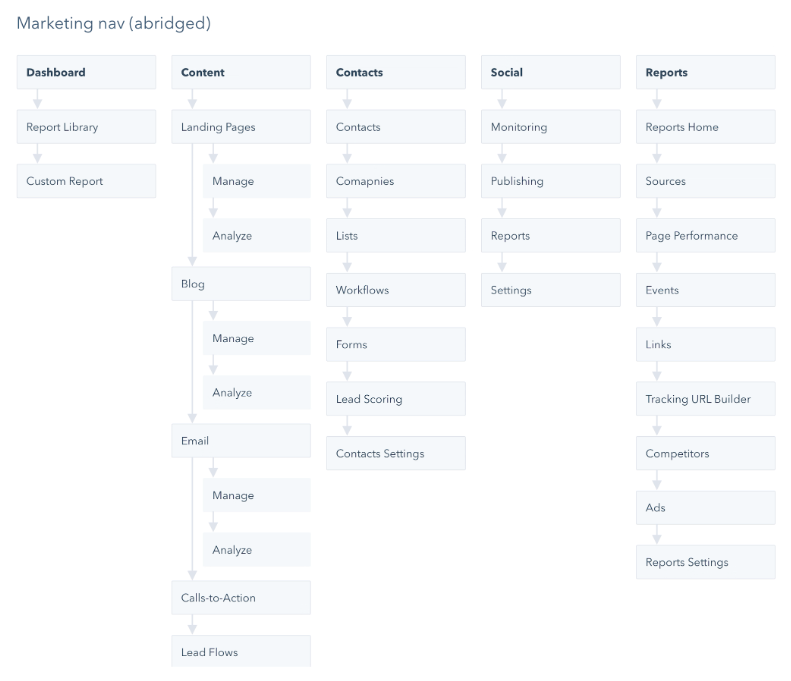
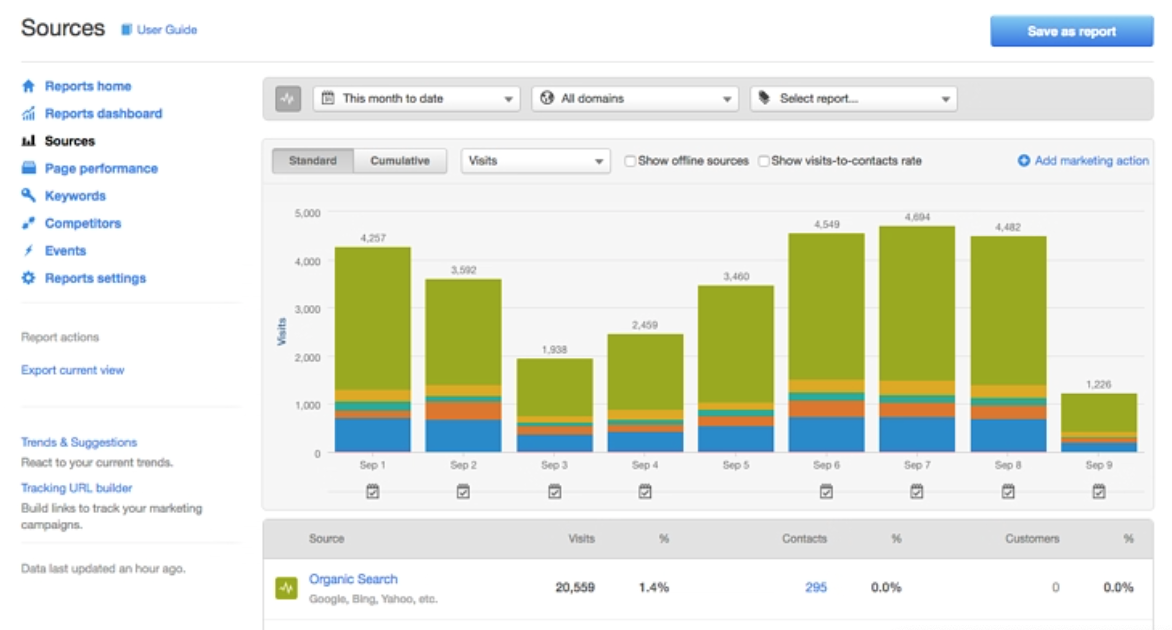
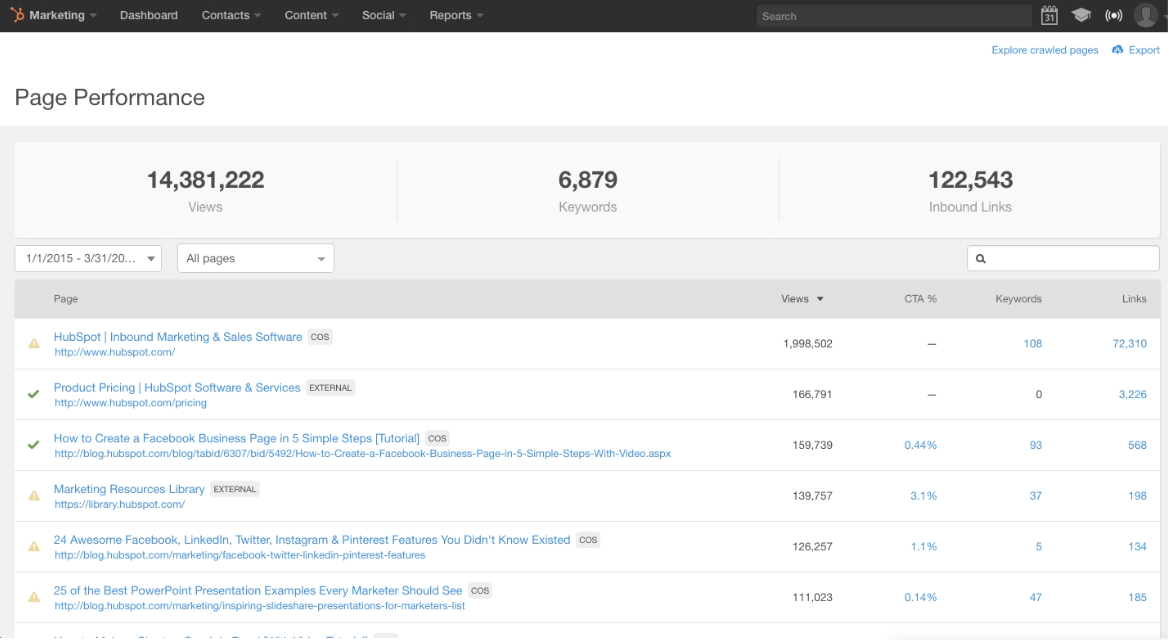
Before our changes, HubSpot's reporting system was fragmented, with each app featuring its own version and style of reporting. This led to inconsistent charts and data, and disjointed experiences across different areas like Blog, Email, Website, or Sales data. Customers found it difficult to locate the data necessary for informed decision-making or to gauge their performance from the previous quarter.
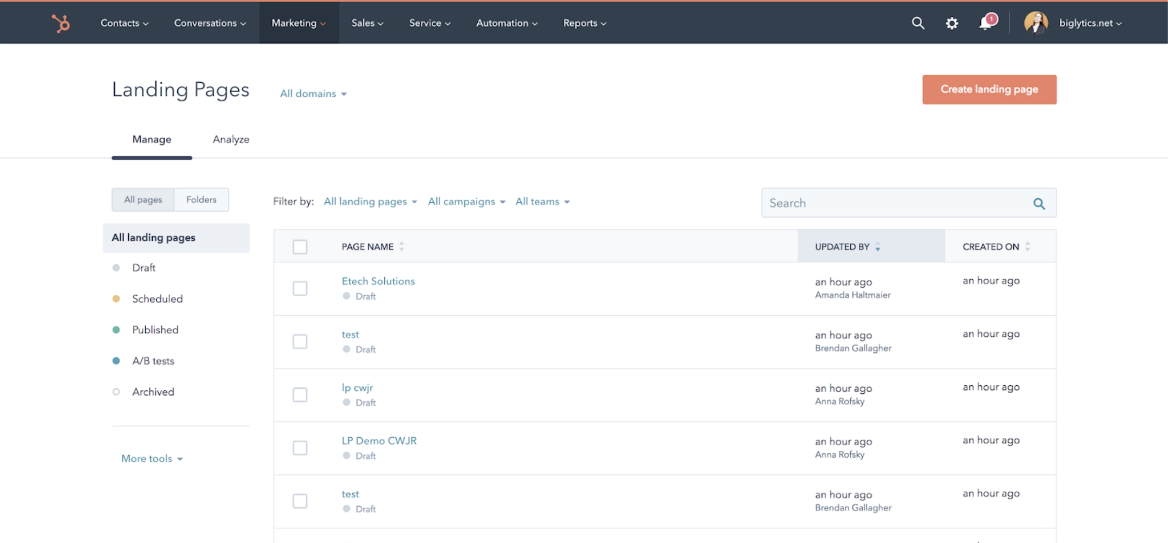
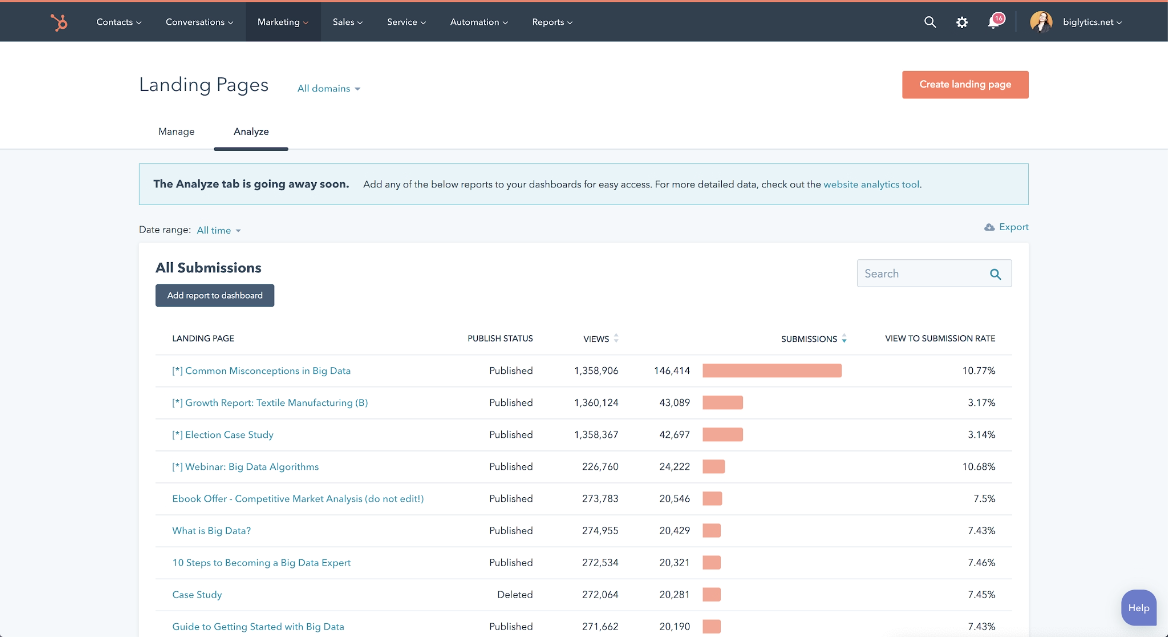
Additionally, the embedded reporting features within each tool, accessible through an "analyze" tab, saw minimal usage. For instance, in one tool, only 2% of marketers looked at available reports over a one-month period.
Problem
Initially, I surveyed around 1,000 customers, asking them where they started their reporting journey, where they eventually found the answer, and how confident they were in their discovery. I also requested that customers include any external tools they used and indicate when they felt the need to leave the product. Following this, my team conducted listening labs with customers, observing their activity during regular reporting tasks.
This approach provided insights into what customers consider "reporting" tasks compared to "execution" tasks. We then explored whether customers perceived reporting tasks as integral to the product or as distinct and separate.
Our initial findings suggested that customers prefer consolidating reporting tasks. This led us to focus on two main issues:
Customers struggle to find the reports they need, leading to a perception that the HubSpot system lacks robustness. This is primarily due to the inconsistent and disjointed information architecture.
Customers doubt the accuracy of the reports they do find, eroding trust in the system. This stems from organizational silos and a lack of consistent methods for data calculation and presentation.
Usage data confirmed our suspicions that the existing tools were not effectively helping customers understand their marketing, service, or sales funnels. Upon closer examination, we discovered that, at best, the "analyze" tabs (the current reporting model) were used by 35% of users, while at worst, they had a penetration rate of only 2%. Furthermore, over 50% of customers who did use the "analyze" tabs accessed them only 1-2 times a month, compared to over 10 times a month for creation tools.
Solution
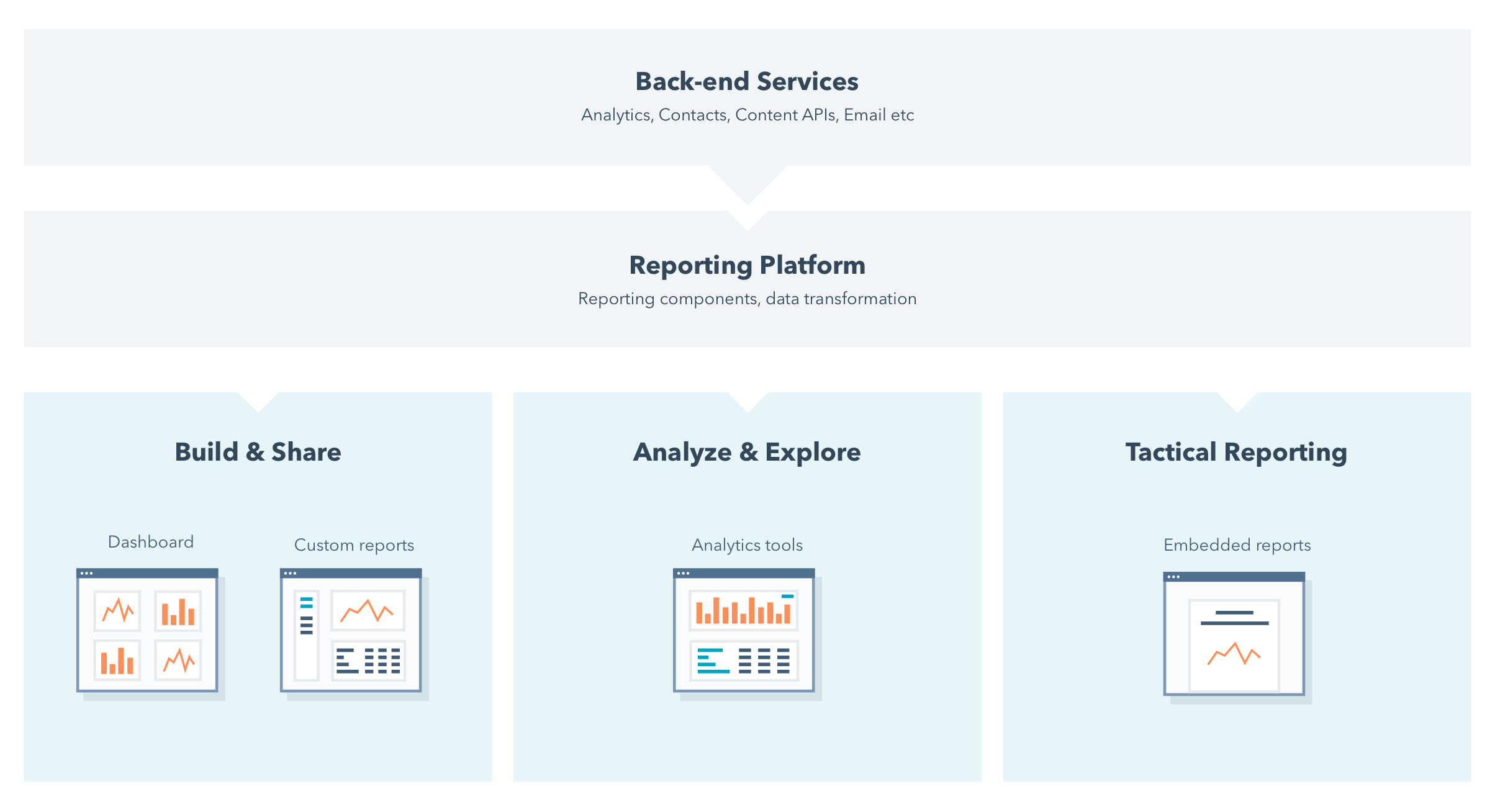
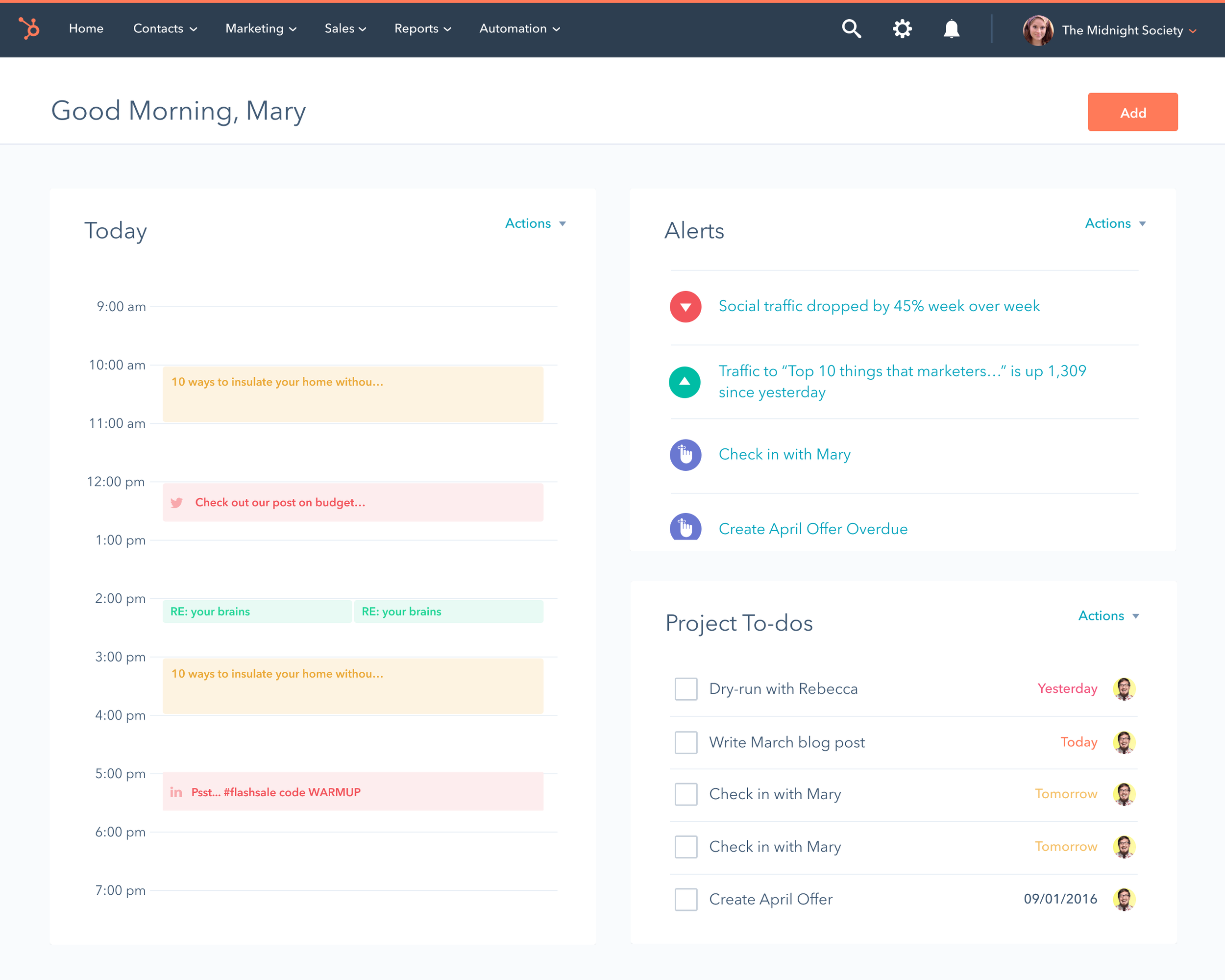
Once we decided to consolidate reporting tasks, we needed to focus on specific tasks and customer journeys. To achieve this, we developed a framework to determine whether the experience revolved around "doing" more work (e.g., drafting your next best email), "exploring data" (e.g., assessing website performance without a clear starting point), or building and sharing data with your team (e.g., generating monthly reports or team dashboards).
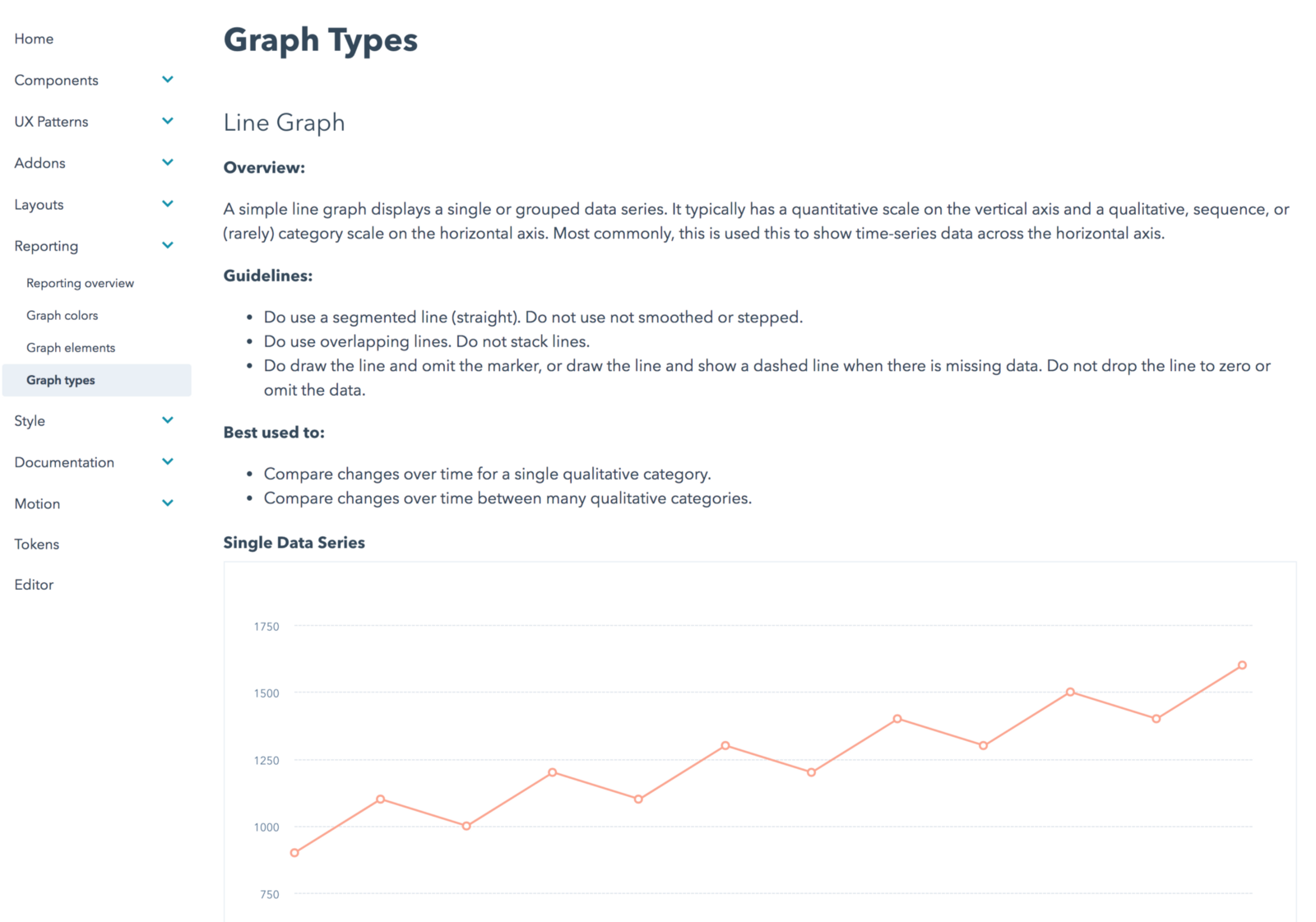
As part of our efforts, we integrated standard components for charts into our sketch kit and design library. We established a process for reviewing new requests and collaborated with teams to transition both their data and front-end elements to the reporting platform.
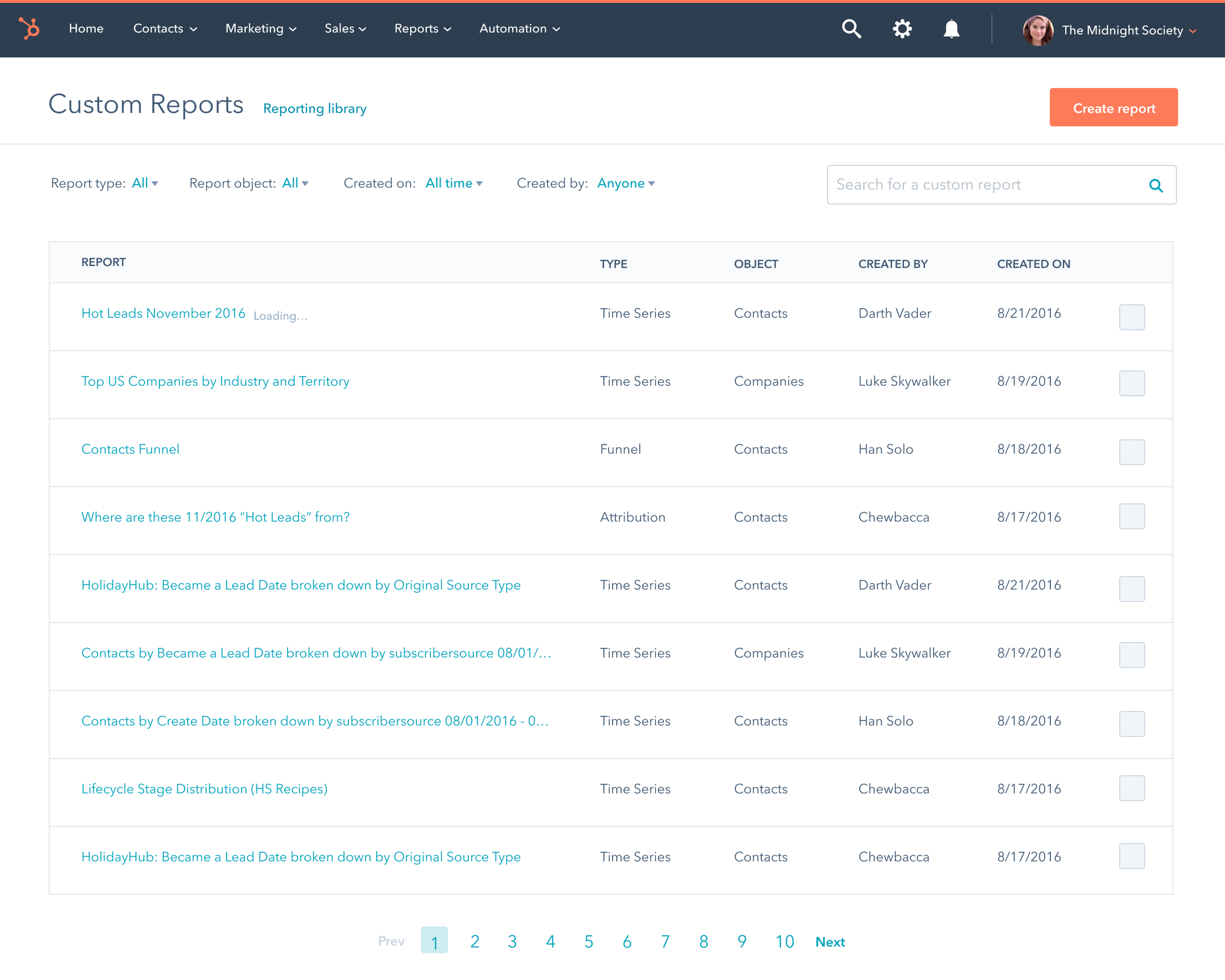
We launched this project iteratively in 2018. While some parts performed exceptionally well, others have room for improvement. Our dashboards tool and custom reporting tools are successful, as customers are familiar with and expect to be able to create reports based on their HubSpot data.
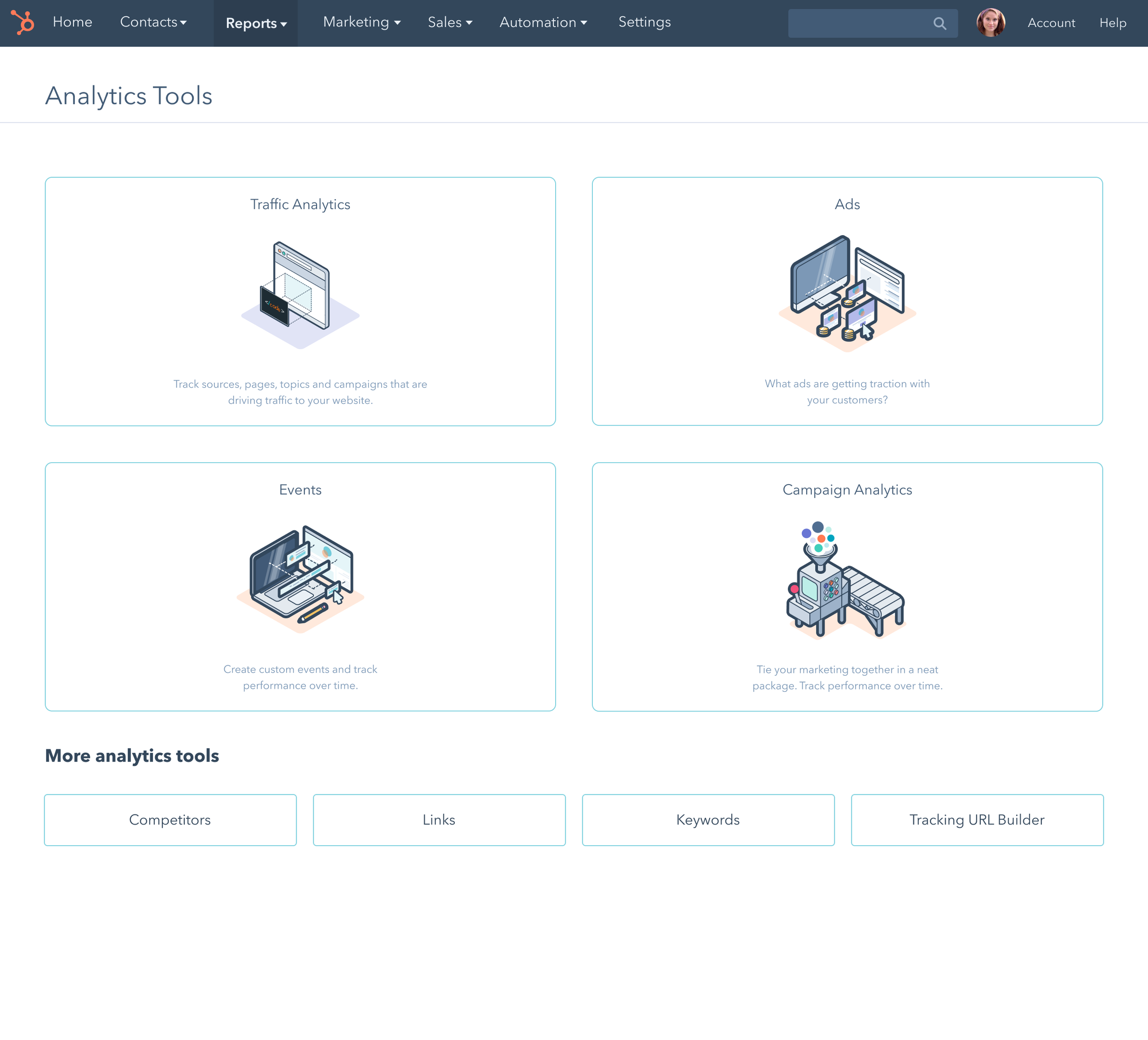
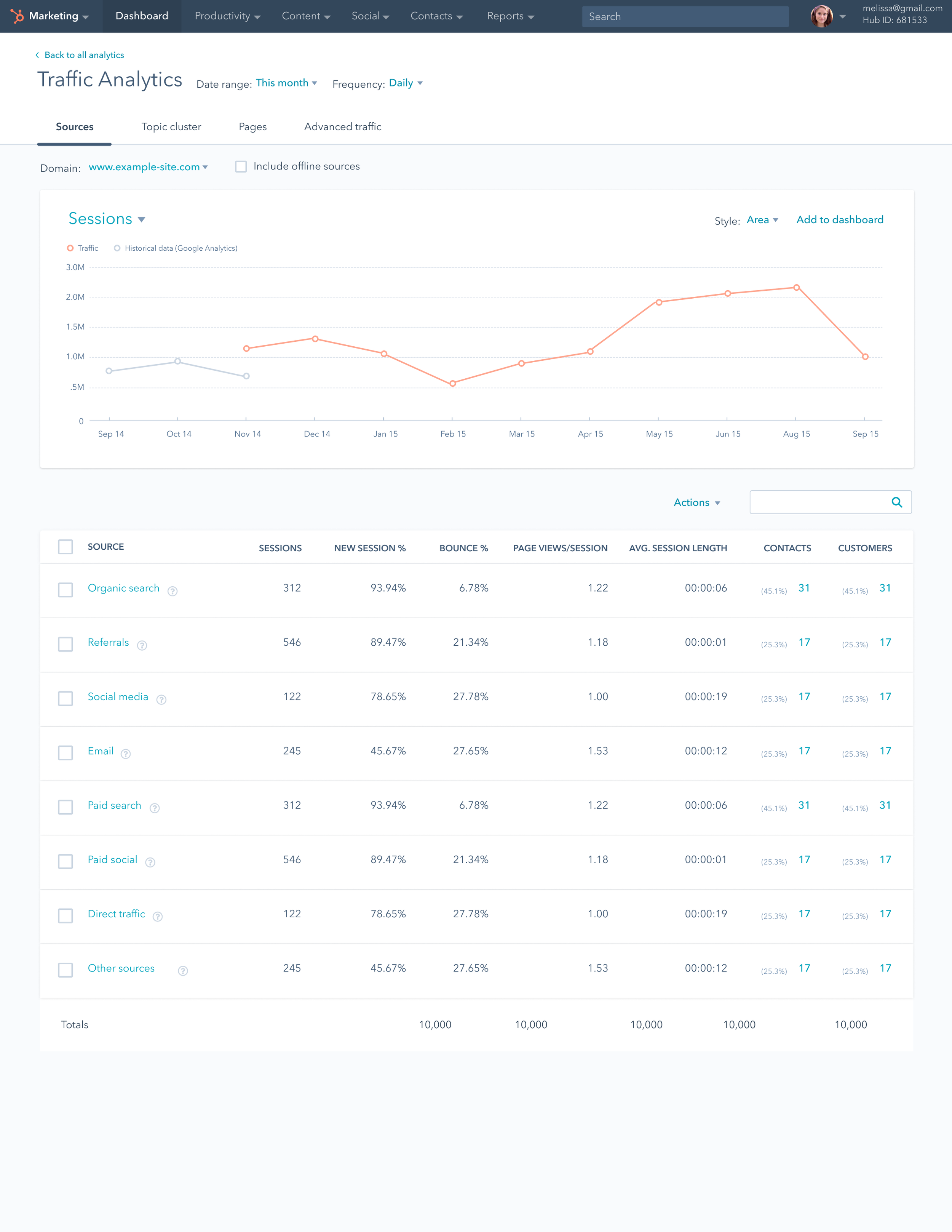
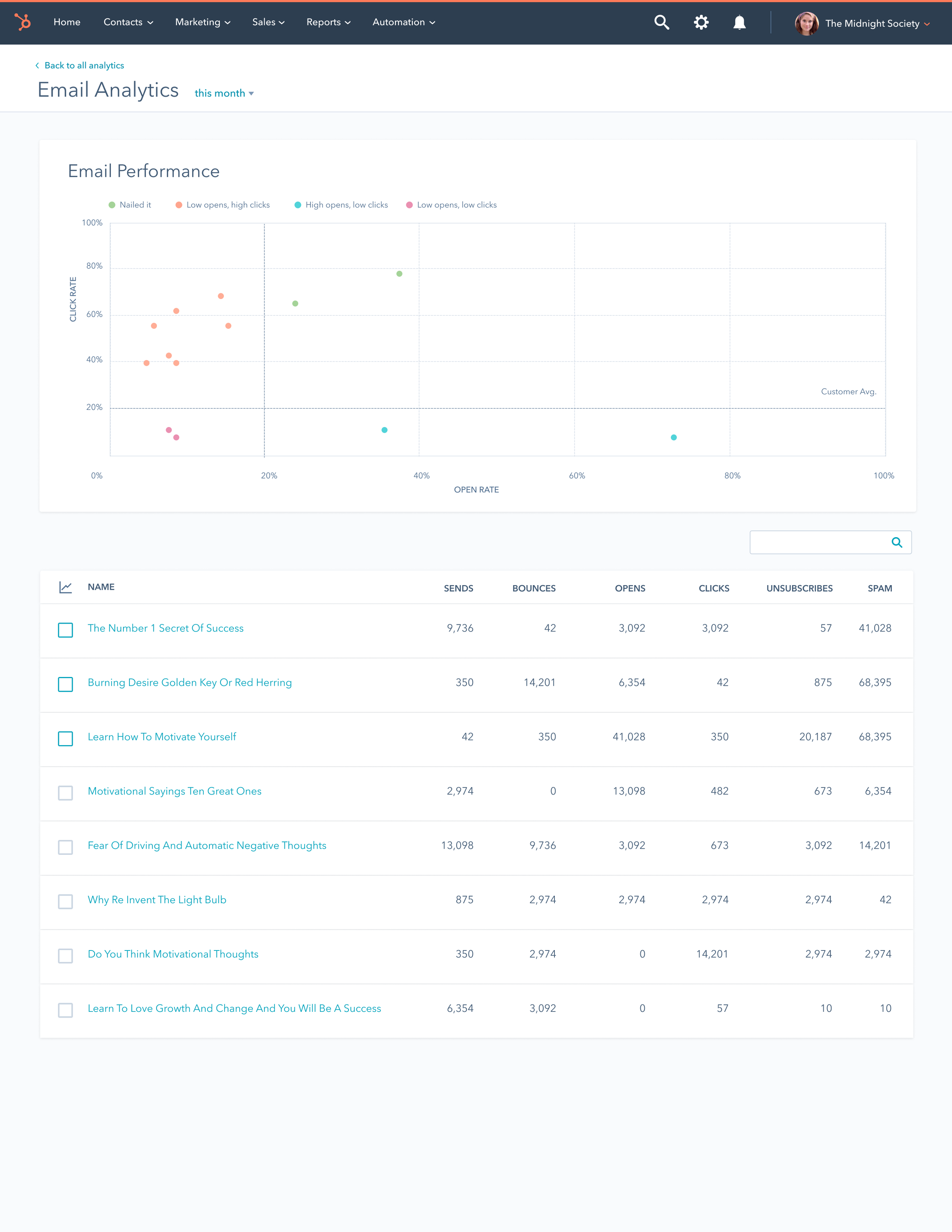
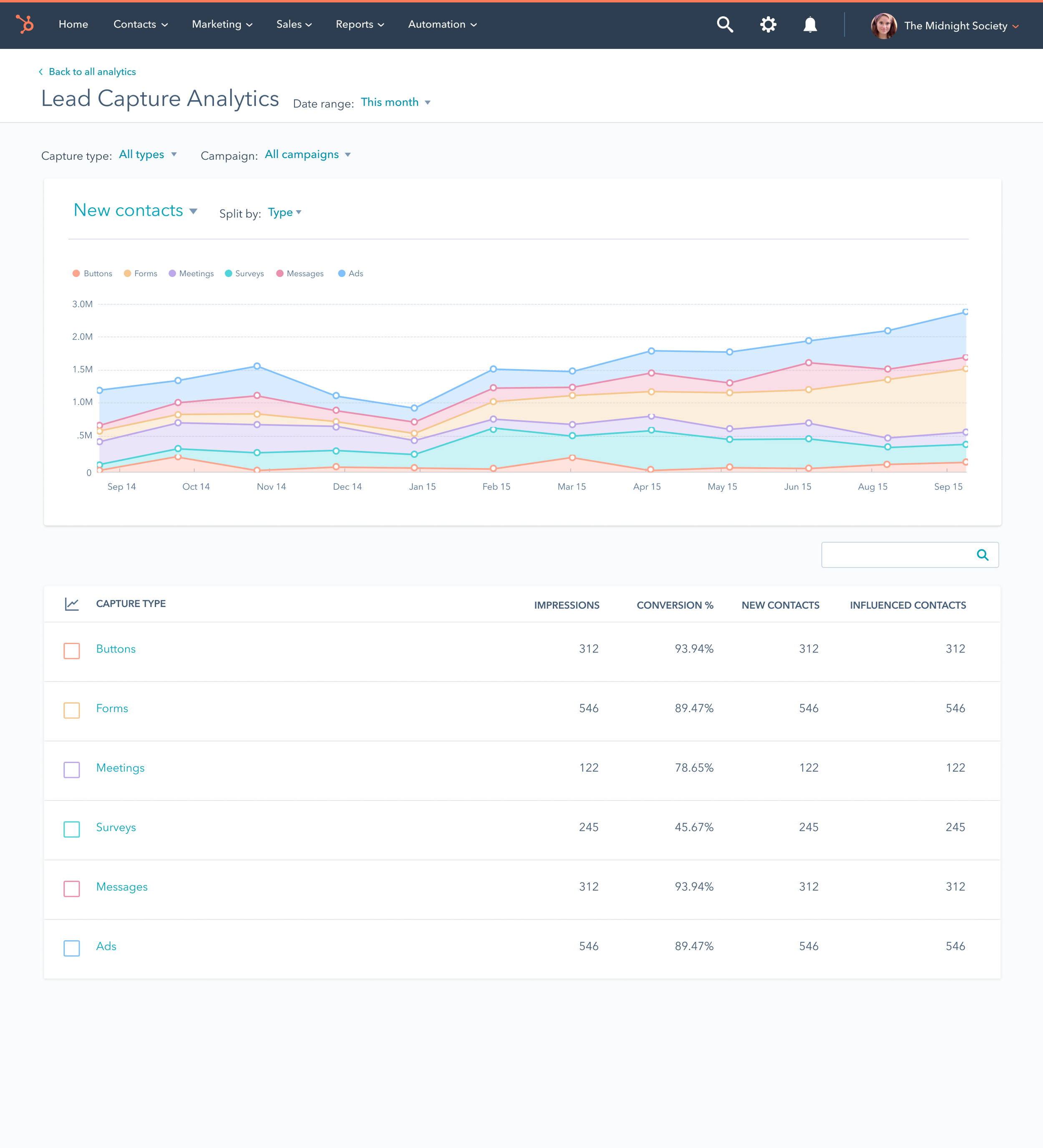
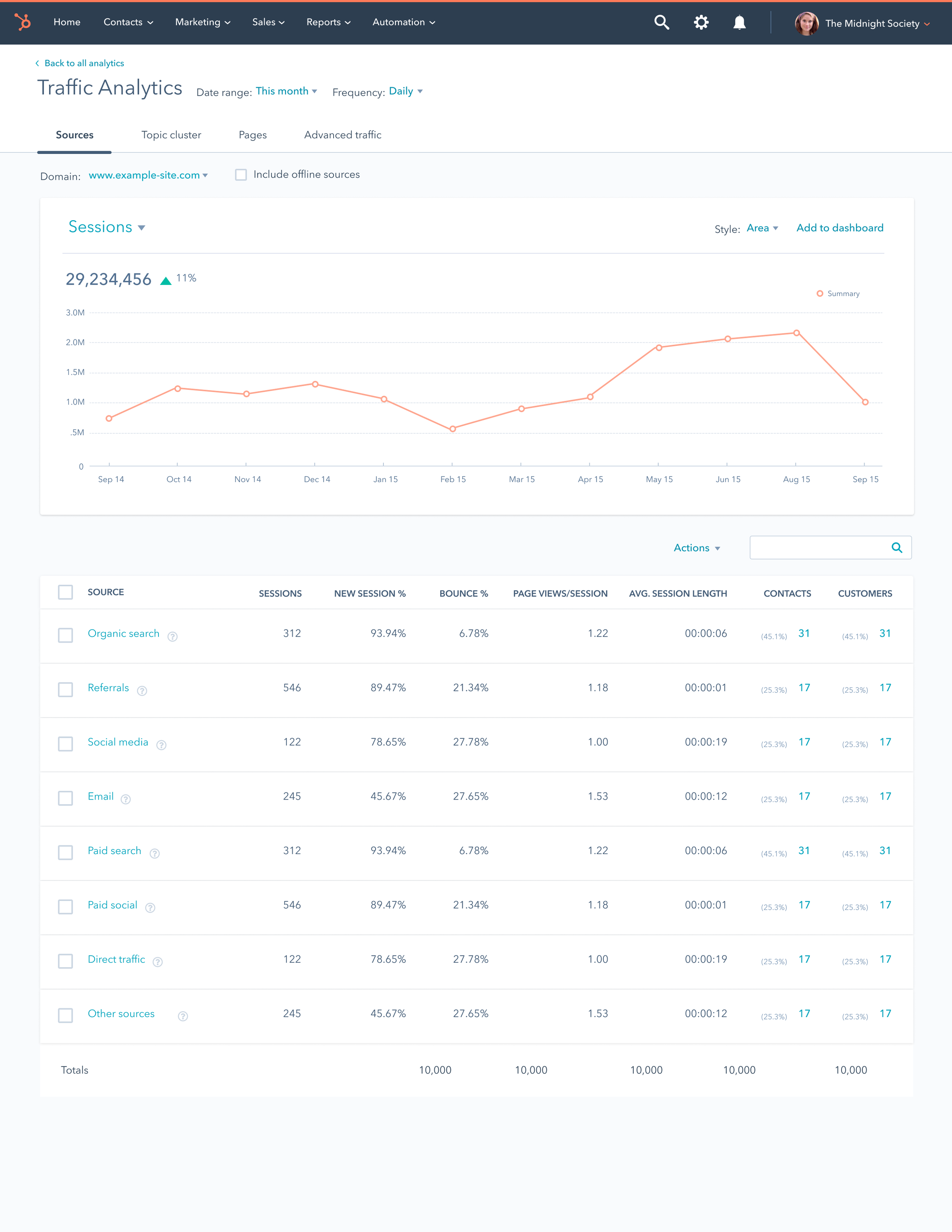
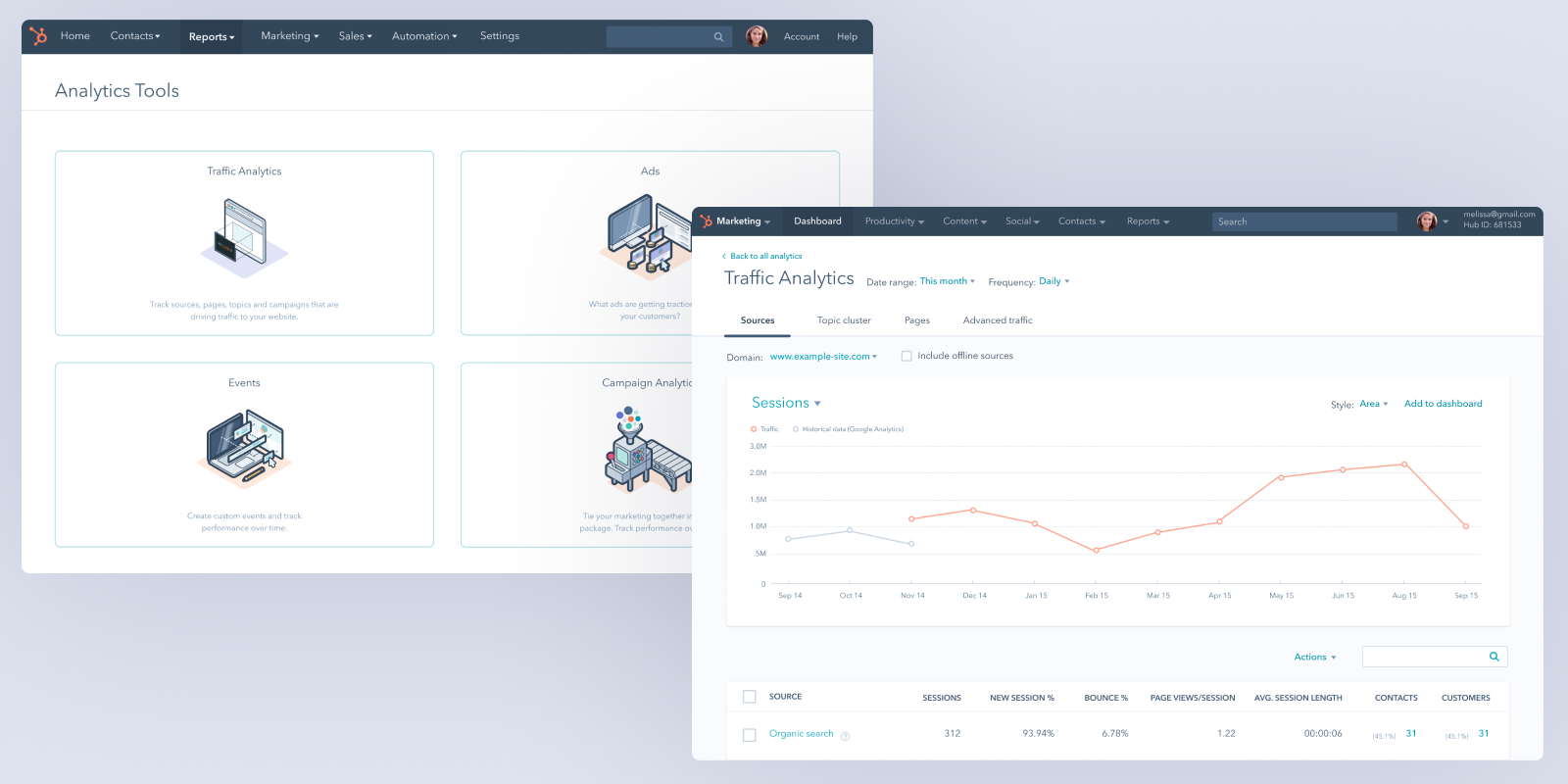
Our analytics tools, which were a significant focus, have varied in performance. Traffic Analytics, designed for our primary customer, website marketers, has the highest retention at week 8, around 40%. We've introduced approximately 12 analytics tools, each with different levels of success. Revenue Analytics, targeting Sales Managers, is also highly successful, with about 60% of users who have access regularly checking the page. However, qualitative customer feedback has been mixed, with some negative trends emerging around flexibility, personalization, and functionality.
I also wrote an article on the process.
Results